
THC & CBD Alternatives
Kratom. Kava. Functional Mushrooms. Strategic Stacks. Genuine results without the drawbacks.
If CBD underwhelmed you or THC left you groggy, tired, or needing more over time — there are specific scientific reasons for that. There are also specific botanical alternatives that work through different mechanisms, don't cause the same tolerance and dependence patterns, and deliver more targeted results. We've been carrying them since 2012.
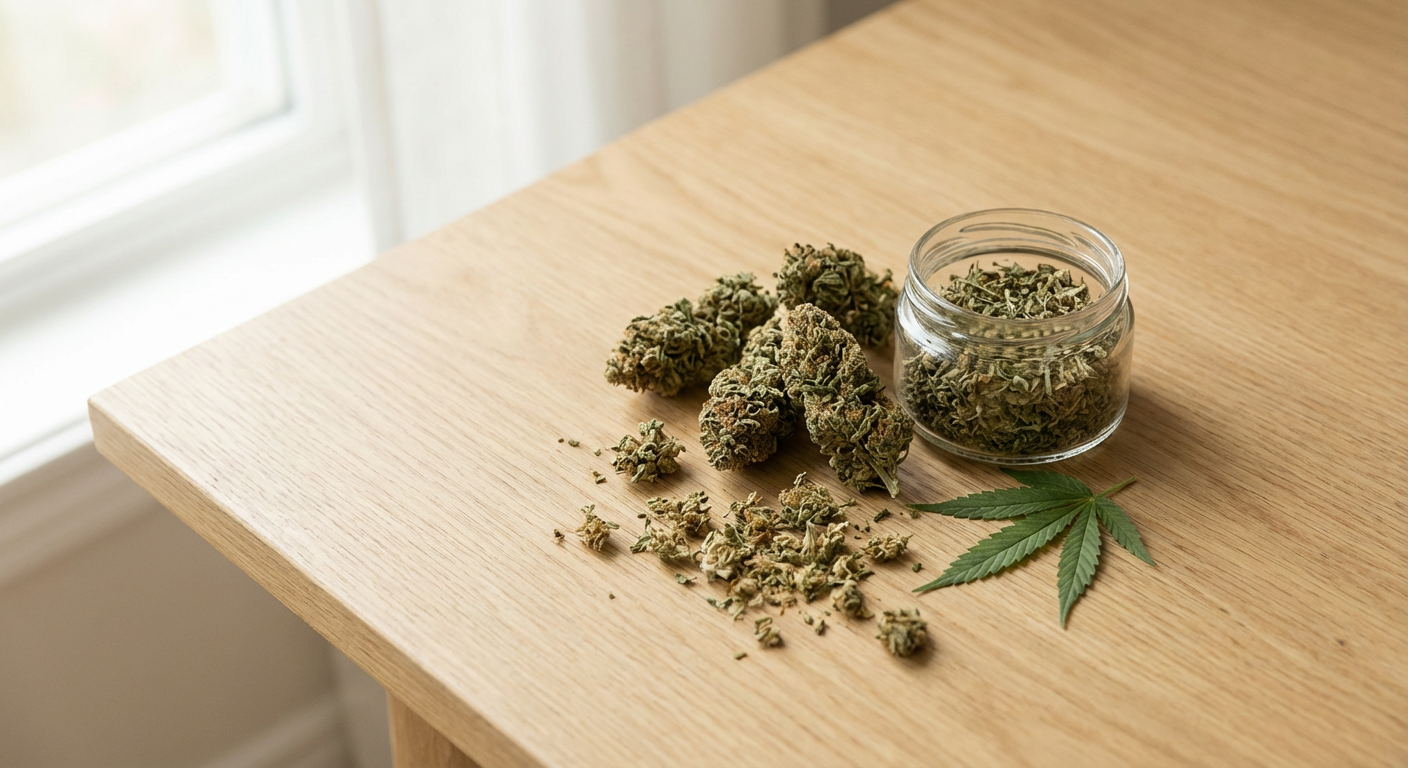
THC and CBD alternatives are botanical and supplement-based wellness solutions that address the same goals — pain relief, sleep support, anxiety, energy, focus — through different biological mechanisms that don't carry the same tolerance, dependence, and sleep disruption patterns associated with cannabinoids.
At Masterpiece Alternatives in Perham, MN, our primary alternatives are kratom (for pain, energy, and sleep), kava (for anxiety and social relaxation), functional mushrooms (for cognitive function, immune health, and stress resilience), and targeted supplement stacks that combine these with synergistic compounds like magnesium glycinate, black seed oil, and L-theanine. We've been guiding customers through these options since 2012 — honest, science-based guidance, no pressure.
Cannabis Dependency Is More Common Than Most People Realize
Most people think of cannabis as harmless compared to alcohol or prescription drugs. The data tells a more complicated story — and it helps explain why so many daily users eventually hit a wall. The comparison to our alternatives is equally important.
| Substance | All Users Who Develop Dependency | Daily Users | Withdrawal Duration | Withdrawal Severity |
|---|---|---|---|---|
| Cannabis / THC | ~30% (rivals tobacco) | 50–60% | 2–12+ weeks | Moderate–Severe |
| CBD (daily) | Emerging — ECS downregulation documented | Unknown, increasing | Weeks | Mild–Moderate |
| Alcohol | 15% | ~50% | 4–8 weeks | Severe (can be fatal) |
| Prescription Opioids | 23% | 50–75% | 4–12 weeks | Severe |
| Caffeine | 9–14% | ~50% | 2–9 days | Mild |
| Kava | Minimal — reverse tolerance common | Minimal | None documented | None |
| Kratom | 3–6% (Johns Hopkins 2020) | 3–6% | 2–7 days | None–Mild (coffee-comparable) |
| Functional Mushrooms | None documented | None | None | None |
Sources: NIDA, Johns Hopkins 2020 kratom study (Grundmann et al.), Hasin et al. JAMA Psychiatry 2015. Cannabis dependency rates among daily users rival commercial tobacco. Among heavy daily cannabis users, dependency markers appear in 70–80% of users.
Five Documented Problems with Long-Term Cannabis Use
These aren't rare side effects — they're predictable physiological responses to chronic THC exposure. Most daily users are experiencing at least two or three of these right now and attributing them to something else.
Cannabis treating anxiety it's actively creating
THC initially reduces anxiety by temporarily activating CB1 receptors in the amygdala — mimicking your body's natural calming endocannabinoids. It works, and users reasonably conclude cannabis helps their anxiety.
But with chronic use, the brain detects the constant external cannabinoid flood and downregulates CB1 receptors by 20–60%. Natural anandamide production decreases. Baseline anxiety rises above pre-use levels. Cannabis is now temporarily relieving the anxiety it's causing.
- Paranoia that wasn't there before — HPA axis dysregulation, chronically elevated cortisol
- Anxiety when not using — your ECS can no longer regulate stress without external input
- Clinical studies show chronic users report 60% higher anxiety levels than non-users, even while actively using
- The definitive test: if anxiety spikes days 2–5 after stopping, cannabis was maintaining it, not treating it
You're unconscious — you're not recovering
THC reduces sleep onset time — you fall asleep faster. That's real. But what's happening during those hours is not restorative sleep. THC suppresses REM — the stage responsible for memory consolidation, emotional processing, hormone regulation, and brain detoxification.
- Occasional use (1–2x/week): 15–25% REM reduction
- Regular use (3–5x/week): 30–50% REM reduction
- Daily use: 50–70% REM reduction
- Heavy daily use: up to 90% REM suppression
- Result: 8 hours unconscious, wake up exhausted — brain accumulated "REM debt"
- Stopping THC: REM rebound — weeks of vivid, disturbing dreams as the brain tries to catch up
- Long-term: memory problems, emotional dysregulation, cognitive decline from chronic REM deprivation
The pain treatment that makes pain worse
This one surprises most people. THC initially reduces pain signaling through CB1 activation — and for acute, short-term use it's genuinely effective. But with chronic use, the brain develops cannabinoid-induced hyperalgesia — the opposite of what users expect.
As CB1 receptors downregulate, the brain's endogenous pain-regulation system weakens. Pain threshold lowers. The same stimuli now register as more painful than they did before cannabis use began. Longitudinal studies show chronic cannabis pain patients report higher pain levels than non-users after 12+ months of use.
- Cannabis is now managing pain it's amplifying
- Stopping intensifies pain further during withdrawal — ECS-mediated pain regulation impaired
- Users attribute worsening pain to their condition, not the substance — and use more to compensate
- The trap: more cannabis → more hyperalgesia → worse baseline pain → more cannabis
Testosterone, cortisol, and the cascade nobody talks about
The endocannabinoid system doesn't just regulate mood and sleep — it's deeply involved in hormone production. Chronic THC exposure disrupts this in ways most users don't connect to their cannabis use.
Cortisol: Acute THC temporarily lowers cortisol — you feel relaxed. Chronic use dysregulates the HPA axis, leaving cortisol chronically elevated. High cortisol drives baseline anxiety, blood sugar instability, belly fat storage, increased inflammation, and impaired immune function.
Testosterone: THC increases aromatase enzyme activity, converting testosterone to estrogen. Research findings:
- Chronic male users show 20–30% lower testosterone than non-users
- Reduced sperm count and motility in regular users
- In women: hormonal imbalances, irregular cycles, reduced fertility
- High cortisol + low testosterone = muscle wasting — cortisol is catabolic, breaking down muscle for glucose
- Low dopamine (also THC-driven) → less motivation to exercise → further muscle and hormonal decline
Why everything feels flat and pointless
THC triggers dopamine release in the brain's reward center — that's most of the pleasure response. With chronic use, dopamine receptors downregulate. Natural activities that used to feel rewarding — exercise, socializing, accomplishing something — feel flat or unrewarding by comparison.
PET scan research (Volkow et al., PNAS 2014) shows chronic cannabis users have reduced dopamine synthesis capacity in the striatum — the brain's reward and motivation center. This is the neurological basis for the amotivational syndrome many heavy users experience.
- Anhedonia — inability to feel genuine pleasure from everyday activities
- Low motivation, procrastination, apathy — the "I'll do it later" that never comes
- Everything feels like too much effort without being high first
- Emotional numbness — not feeling much of anything
- Brain fog even when sober — dopamine and glutamate system dysregulation
The daily use cost most people don't account for
THC impairs the prefrontal cortex — judgment, coordination, reaction time, working memory. That's by design. For recreational use that's fine, but it's a real limitation for people using cannabis to manage pain, anxiety, or sleep while still needing to work, drive, and think clearly.
- Can't drive legally after use — significant constraint for the Lakes Area
- Impairs work performance — cognitive tasks, reaction time, memory
- Fails drug tests — detectable 2–6 weeks, incompatible with many jobs, CDL, probation
- Daily use creates a persistent cognitive fog even between uses
None of these appear on standard drug tests. CDL-safe, employment-safe, court-safe.
REM Sleep Suppression — A Closer Look at the Numbers
The single most misunderstood consequence of using THC for sleep — and why our alternative stack works better
THC's Impact on REM by Use Pattern
- Memory: REM consolidates short-term to long-term memory — suppressed nightly, cumulative cognitive deficit
- Emotion: REM processes the day's emotional experiences — missing it compounds stress over time
- Hormones: Growth hormone and testosterone partly secreted during deep and REM sleep — suppressed with THC
- Brain detox: Glymphatic system (brain waste clearance) most active during sleep — impaired by REM disruption
- On quitting: REM rebound — weeks of vivid, disturbing dreams as the brain desperately catches up
Red Kratom + Magnesium Glycinate Stack
- Addresses cause, not symptom: Relieves the pain, tension, and anxious mind that prevents sleep onset — without sedating the brain chemically
- Zero REM impact: No documented suppression of REM or any other sleep stage at any use level
- Magnesium glycinate: Activates GABA-A receptors, relaxes muscles, supports natural melatonin signaling — the body's own sleep system
- Reishi (add-on): Reduces cortisol over 2–4 weeks of daily use, improving baseline sleep quality without acute sedation
- Wake up rested: Full sleep architecture intact — you're actually recovering, not just unconscious
- No rebound: Stop any time without nightmare rebound or sleep disruption
- Sustainable: Rotate kratom strains to maintain effectiveness — no escalating dose required
What Should You Use Instead? Goal by Goal.
Start with your goal. We'll find the right alternative.
These are the conversations we have every day. The right starting point is almost always simpler than people expect — and we've been having this conversation since 2012.
-
Pain reliefRed vein kratom — faster onset, stronger relief than CBD, and no hyperalgesia feedback loop. Red Bali or Red Borneo for beginners. Black seed oil 30 min prior potentiates effects. Chaga + turmeric as long-term anti-inflammatory foundation. Works while you drive to work. Passes every drug test.
-
SleepRed kratom + magnesium glycinate — the stack that actually preserves the sleep architecture THC suppresses. Add Reishi daily for cortisol reduction over time. If you've been using THC nightly, expect 1–3 weeks of vivid dreams when you transition — that's REM rebound, and it's temporary and healthy.
-
Anxiety & stressKava for acute anxiety — GABA-pathway calm without touching your endocannabinoid system. Green vein kratom for broader daily stress relief. Reishi + Ashwagandha for HPA axis regulation — actually fixing the cortisol problem rather than temporarily masking it.
-
Energy & focusWhite or green vein kratom for clean, motivated energy without impairment. Lion's Mane for cognitive clarity and NGF stimulation — a documented mechanism CBD doesn't have. Cordyceps for cellular ATP energy. Mushroom coffee in the morning is the easiest entry point for this stack.
-
Social relaxationKava — the direct answer. Relaxed, present, and social without impairment or next-day grogginess. The traditional social botanical of Pacific Island cultures for 3,000 years, used for exactly the reasons people reach for THC in social settings. Kava sodas and seltzers are the most approachable format.
-
Long-term wellnessA daily multi-mushroom blend (Turkey Tail, Reishi, Lion's Mane, Chaga, Cordyceps) as foundation — more clinical research, more targeted mechanisms, no ECS downregulation, and effects that build over time rather than diminish. Pair with rotating kratom strains as needed for acute symptom relief.
-
Transitioning off THC or CBDThis is worth a conversation in store. We've walked many customers through this — the approach depends on what you were using cannabinoids for, how long, and what you're experiencing now. There's no single right path, and we're not going to hand you a pamphlet. Come in and we'll work through it together.
Many of our customers came to kratom and kava after cannabis — having already left alcohol, prescription pain meds, or benzos behind. Cannabis was a step in the right direction. For a lot of people, it's just not the final destination.
Opioids, benzos, sleep meds, alcohol. High dependence, serious side effects, costly — both financially and physically.
A real improvement for many. Less acutely harmful than what came before. But its own set of problems emerge over time.
Anxiety that's gotten worse, not better. Sleep that doesn't restore. Pain that's harder to manage. Hormonal and motivational changes nobody warned about.
Different mechanisms. No ECS disruption. Fully functional. Stable long-term. This is what most people have been looking for from the start.
Your anxiety has gotten worse, not better.
Cannabis initially calmed it — now you feel anxious when you're not using, and paranoid or on-edge when you are. That's not your anxiety worsening on its own. Chronic THC downregulates the CB1 receptors responsible for calming your brain — and simultaneously elevates cortisol chronically. Cannabis is now maintaining the anxiety it's temporarily masking.
You sleep, but don't recover.
Eight hours in bed and still exhausted every morning. That's REM suppression — daily THC users lose 50–70% of their REM sleep, the restorative stage the brain needs for memory, emotional regulation, and hormone production. You're unconscious, not sleeping. The grogginess is the missing REM, not a coincidence.
Your pain is worse than when you started.
This one surprises people but it's well-documented. Chronic THC use causes cannabinoid hyperalgesia — your brain's pain threshold lowers as CB1 receptors downregulate. Cannabis is now managing pain it's amplifying. Longitudinal studies show chronic cannabis pain patients report higher pain levels after a year of use than non-users.
Your motivation and drive have flatlined.
Things that used to feel rewarding don't anymore. Hard to get started, hard to care, hard to feel much of anything strongly. Chronic THC downregulates dopamine receptors in the brain's reward center — natural activities feel flat by comparison to the dopamine hit of using. This is neurological, not personal weakness.
You feel different physically — and not in a good way.
Lower energy, harder to maintain muscle, changes in libido or cycles, carrying more weight around the middle. Chronic THC elevates cortisol (catabolic — breaks down muscle) while lowering testosterone by 20–30%. The hormonal disruption is real and documented, and most people never connect it to their cannabis use.
Your CBD stopped working entirely.
Switched brands, raised the dose, same result — nothing. That's not a product quality issue. Your CB2 receptors have downregulated from daily use. The mechanism that made CBD work initially is now compromised. This isn't fixable by buying better CBD — it requires stepping away from cannabinoids entirely.
What People Were Actually Looking For
Cannabis was the best available answer at the time — but it was rarely the most direct answer. Here's what people needed, and what addresses it more precisely.
What brought people to cannabis
- Chronic pain that prescription opioids weren't worth the tradeoff for
- Anxiety and sleep issues that benzos and Ambien made worse long-term
- Wanting to quit or reduce alcohol — something to wind down with socially
- Inflammation that NSAIDs weren't resolving safely
- Depression and mood that SSRIs blunted more than helped
- Wanting something natural that wasn't a pharmaceutical
What addresses those goals more directly
- Red kratom: Direct opioid receptor pain relief — stronger than CBD, no hyperalgesia, fully functional
- Kava + red kratom: GABA-pathway anxiety and sleep without ECS dependence or REM suppression
- Kava: The most direct alcohol substitute available — social, relaxing, clear-headed, zero hangover
- Chaga + Turkey Tail + turmeric: Anti-inflammatory without gut damage or cannabinoid receptor damage
- Reishi + ashwagandha: Adaptogenic mood and cortisol support that builds over time, not diminishes
- Functional mushrooms + kratom: The plant-based wellness answer people were looking for from the start
Where Cannabis Creates the Problem It's Treating
- Anxiety feedback loop: Chronically elevated cortisol + ECS downregulation — cannabis is now the cause and the temporary relief
- Sleep that doesn't restore: Unconscious but not recovering — daily users losing the majority of their REM sleep to suppression
- Hyperalgesia: Lower pain threshold from CB1 downregulation — managing pain that cannabis itself has amplified
- Hormone disruption: Chronically elevated cortisol, 20–30% lower testosterone, muscle wasting, metabolic changes
- Motivation collapse: Dopamine receptor downregulation — natural rewards feel flat, everything feels like too much effort
- Dependency at scale: 50–60% of daily users develop Cannabis Use Disorder — a rate that rivals tobacco
- Drug test risk: Detectable 2–6 weeks — incompatible with CDL, many jobs, probation, court
What Our Alternatives Do Instead
- Anxiety resolved at the source: Kava through GABA. Reishi + ashwagandha regulating the HPA axis and cortisol — not masking it
- Actual restorative sleep: Red kratom + magnesium glycinate — sleep architecture preserved, REM intact, wake up rested
- Pain without the trap: Red kratom via opioid receptors — no hyperalgesia feedback loop, no ECS compromise
- Hormone-neutral: Kratom, kava, and mushrooms don't disrupt testosterone, cortisol cycles, or aromatase activity
- Motivation restored: White kratom via adrenergic pathways, Lion's Mane via NGF, Cordyceps via ATP — none suppress dopamine
- Dependency rate 3–6%: Kratom's documented dependency rate is a fraction of cannabis — and most experience no withdrawal at all
- Drug test safe: None appear on any standard panel. CDL, employment, court, athletic — all clear
Was using: THC for chronic pain or injury recovery
Switch to: Red Bali or Red Borneo kratom on empty stomach. Add black seed oil 30 min prior for potentiation.
Why it works better: Direct opioid receptor activation — faster, stronger, and you can drive after. No hyperalgesia. Strain rotation maintains effectiveness long-term without escalation.
Was using: THC gummies or flower nightly for sleep
Switch to: Red kratom + magnesium glycinate 45–60 min before bed. Add Reishi daily.
Why it works better: Addresses sleep onset without suppressing REM. Expect 1–3 weeks of vivid dreams when transitioning — that's REM rebound, normal and temporary. You wake up actually rested.
Was using: THC to decompress, manage social anxiety, or wind down
Switch to: Kava soda or kava shot on empty stomach. Layer green kratom if you want more depth.
Why it works better: GABA-pathway relaxation — genuinely calm and present, not impaired and withdrawn. No cortisol disruption. No ECS downregulation. Works identically on day 1 and year 3.
Was using: CBD or low-dose THC for daytime calm and focus
Switch to: Lion's Mane + white vein kratom. Mushroom coffee in the morning is the easiest entry.
Why it works better: Lion's Mane has a documented NGF mechanism for cognitive improvement. CBD doesn't. White kratom adds functional energy — sharp, not foggy. Dopamine pathways supported, not suppressed.
Was using: Alcohol socially or to unwind, or trying to reduce drinking
Switch to: Kava soda, seltzer, or traditional shell — the most direct functional alcohol replacement that exists.
Why it works better: Social relaxation via GABA. Clear-headed. No hangover, no liver load, no calories, no impairment. Traditional use for exactly this purpose for 3,000+ years in Pacific Island cultures.
Was using: Daily CBD oil or capsules for general wellness and "balance"
Switch to: Multi-mushroom blend (Lion's Mane, Reishi, Turkey Tail, Chaga, Cordyceps) taken daily.
Why it works better: Documented mechanisms for immune health, cognitive function, stress resilience, hormone support, and energy. No ECS downregulation. Effects build over time rather than diminishing.
We've had this conversation thousands of times since 2012.
The pattern is consistent: people who transition to kratom, kava, or functional mushrooms from cannabis almost universally prefer them — not because cannabis is evil, but because these tools are more targeted, more functional, and more sustainable for the specific things people were trying to accomplish. Come in and tell us what you've been using and what you're dealing with. We'll find the right starting point — no pressure, no judgment.
Combinations That Outperform Hemp Products
The right botanical isn't always a single product. Specific combinations work synergistically to deliver better results than any cannabinoid product for the same goal — and without the documented side effects of chronic cannabinoid use.
- Red Vein Kratom — relaxation, pain relief, sleep onset without REM suppression
- Magnesium Glycinate — GABA-A activation, muscle relaxation, nervous system calm
- Reishi Mushroom — adaptogenic cortisol reduction, long-term sleep quality support
THC helps you fall asleep but suppresses REM — the stage your brain needs to actually recover. Daily users lose 50–70% of their REM sleep. This stack addresses the root causes of poor sleep (pain, tension, racing thoughts) without altering sleep architecture. You wake up rested, not sedated.
- Green Vein Kratom — balanced energy, pain relief, mood — no impairment
- Black Seed Oil (1 tsp, 30 min prior) — potentiates kratom, anti-inflammatory, immune support
- Chaga or Turkey Tail — antioxidant and immune foundation without ECS disruption
Daily CBD causes ECS downregulation — the relief diminishes as your endocannabinoid system adapts and becomes dependent. This stack works through entirely different pathways, delivers more targeted results, and doesn't create dependence or the hormonal disruption chronic THC/CBD use produces.
- White Vein Kratom — clean, motivated energy and focus without impairment
- Lion's Mane — NGF stimulation, memory, sustained cognitive clarity
- L-Theanine — smooths any edge, promotes calm alert focus
- Cordyceps — cellular ATP energy, oxygen efficiency
THC impairs the prefrontal cortex — even microdosing blunts reaction time and working memory. Chronic use depletes dopamine, making motivation and focus harder over time. This stack supports cognitive function rather than compromising it. You're sharper, not foggy.
- Kava (soda, seltzer, or shot) — traditional social relaxation, no cognitive impairment
- Green Vein Kratom — optional broader mood and ease
- L-Theanine — calm, social alertness
Kava has been the social botanical of Pacific Island cultures for 3,000 years — used for the same reasons people reach for THC socially, without the impairment, morning grogginess, ECS dependency, or the cortisol and hormonal disruption chronic THC use creates. Relaxed and present, not impaired and inward.
The Problem Isn't Willpower. It's Biology.
Cannabis dependency has a dependency rate that rivals tobacco. Understanding why helps you choose tools that don't create the same cycle.
Why Cannabis Creates Dependency
- ECS downregulation: CB1/CB2 receptors become less sensitive with regular use — your body's natural mood, pain, and sleep regulation weakens
- Anxiety feedback loop: The ECS disruption raises baseline anxiety — cannabis now temporarily relieves the anxiety it's causing
- Sleep dependency: Natural sleep architecture deteriorates — you can no longer fall asleep without external cannabinoid input
- Hyperalgesia: Lower pain threshold from chronic CB1 suppression — pain worsens over time, requiring more cannabis to manage
- Hormonal disruption: Chronically elevated cortisol, lowered testosterone — the body can no longer regulate these without external cannabinoids
- Dopamine depletion: Reward pathways blunted — natural motivation and pleasure require cannabis to feel accessible
- Withdrawal on stopping: Anxiety, insomnia, night sweats, irritability lasting weeks as the ECS attempts to recalibrate
- Dependency rate: 50–60% of daily users — rivaling tobacco. 70–80% of heavy daily users show dependency markers
Why Our Alternatives Don't
- Different pathways entirely: Kratom uses opioid and adrenergic receptors. Kava uses GABA and ion channels. Mushrooms use immune and NGF pathways. None touch the ECS.
- No anxiety amplification: Kava resolves anxiety through GABA. Kratom doesn't dysregulate cortisol with responsible use. Reishi reduces baseline cortisol over time.
- Sleep architecture preserved: Red kratom + magnesium addresses sleep causes without suppressing REM — no sleep dependency develops
- No hyperalgesia: Red kratom's opioid receptor mechanism doesn't lower pain threshold — effective pain relief without the trap
- Hormone-neutral: No aromatase disruption, no chronic cortisol elevation, no testosterone suppression from kratom, kava, or mushrooms
- Dopamine supported: White/green kratom via adrenergic pathways, Cordyceps via ATP, Lion's Mane via NGF — motivation pathways supported, not suppressed
- Minimal withdrawal: Most kratom users experience nothing stopping. Those who do: brief, mild, coffee-comparable. Kava and mushrooms: none.
- Kratom dependency rate: 3–6% (Johns Hopkins 2020) — a fraction of cannabis, managed further with strain rotation and rest days
If you've researched kratom and encountered alarming claims — dangerous, addictive, responsible for deaths — it's worth understanding where those claims come from and what independent research actually shows.
What peer-reviewed research shows: A 2020 Johns Hopkins analysis of nearly 3,000 kratom users found kratom has a lower abuse potential than prescription opioids, a favorable safety profile at normal use levels, and the majority of users report improved quality of life. CDC data shows no confirmed deaths attributable to kratom alone — cases attributed to kratom have consistently involved multiple other substances including fentanyl. The documented dependency rate of 3–6% compares favorably to caffeine (9–14%) and dramatically to cannabis (30% overall, 50–60% in daily users).
Why the gap between research and public perception? Kratom addresses pain, anxiety, sleep, and energy — working through some of the same receptor pathways as prescription opioids and sedatives — at a fraction of the cost. That's a direct commercial threat to several pharmaceutical categories. Organizations with documented ties to pharmaceutical interests have funded anti-kratom lobbying and awareness campaigns.
What responsible use looks like: Lab-tested product from vetted vendors, strain rotation, rest days, appropriate starting doses, and avoiding combinations with alcohol. That's what we teach every customer — because helping you use kratom sustainably is better for you, and it's better for our reputation.
- Johns Hopkins 2020: kratom dependency rate 3–6%, lower abuse potential than prescription opioids
- CDC data: no confirmed deaths from kratom alone in the available record
- Poison control: fewer adverse event reports than many common OTC supplements
- User surveys: 90%+ report improved quality of life and successful wellness management
The Kratom Truth Project at kratomtruthproject.org covers this in depth — sourced investigative journalism on the science, policy history, and financial interests shaping public perception.
KratomTruthProject.org is an independent investigative journalism site covering the science, policy, and financial politics of kratom — including a 10-part series on the forces shaping public perception and a 12-article educational library covering alkaloid science, DEA scheduling history, clinical research, and the documented dependency comparisons above. Sourced. Documented. Not affiliated with any kratom vendor.
THC & CBD Alternatives FAQ
The questions we answer most often from customers who are curious about switching, skeptical about alternatives, or frustrated that their current products stopped working.
For many people, yes — and it works faster and more consistently. Red vein kratom activates opioid receptors (mu, delta, kappa) — the same pathways responsible for genuine pain signal interruption. This is a more direct mechanism than CBD's indirect anti-inflammatory approach, and it doesn't require the impairment that comes with THC.
Onset is 15–30 minutes versus 1–2 hours for CBD oils or 45–90 minutes for THC edibles. Effects are reliable and dose-predictable — unlike THC, where potency variation between batches is significant.
No — and this is one of the most practical advantages over THC. Standard 5-panel, 10-panel, and 12-panel drug tests do not screen for kratom alkaloids (mitragynine, 7-hydroxymitragynine), kavalactones, or functional mushroom compounds. None of them trigger false positives for THC, opioids, or any other commonly screened substance.
Kratom and kava are safe for employment pre-screening, DOT testing, court-ordered testing, athletic drug testing, and military testing. THC, by contrast, is detectable for 2–6 weeks in heavy users — making it genuinely incompatible with many jobs and legal situations.
This is one of the most common conversations we have, and there's a reliable approach to it.
The transition period: When you stop THC after extended nightly use, expect 1–3 weeks of REM rebound — intense or vivid dreams as your brain catches up on suppressed REM sleep. This is normal and temporary. Sleep may be disrupted during this window.
The replacement stack:
- Red vein kratom (Red Bali, 2–4g) — 45–60 min before bed, addresses physical tension and pain
- Magnesium glycinate (300–400mg) — taken at the same time, activates GABA and relaxes muscles
- Reishi mushroom — taken daily, reduces cortisol over time and supports natural sleep regulation
Some customers reduce THC gradually rather than stopping cold — using the kratom stack on alternate nights before fully transitioning. Either approach works depending on your situation.
Almost certainly ECS downregulation — and it's well-documented. Your CB1 and CB2 receptors become progressively less sensitive with regular cannabinoid exposure. This is your body's homeostatic response to a constant external signal — it compensates by reducing receptor sensitivity and natural endocannabinoid production.
The result is the cycle most daily CBD users eventually experience: the starting dose stops working, you increase the dose, that stops working, your ECS becomes partially dependent on external cannabinoids to regulate mood, pain, and sleep normally.
Switching to kratom, kava, or mushrooms gives your ECS time to reset while addressing the same underlying goals through receptor pathways that don't have this same downregulation pattern. Many customers report that after 4–8 weeks off cannabinoids, CBD works again if they choose to return — though most prefer to stay with the alternatives.
The research says the opposite. A 2020 Johns Hopkins study analyzing nearly 3,000 kratom users found kratom has a lower abuse potential than classical opioids, with a risk profile the researchers compared more favorably than prescription drug alternatives.
The practical comparison:
- THC withdrawal from regular use: anxiety, insomnia, irritability, night sweats, appetite loss — lasting 2–4 weeks due to ECS receptor downregulation and dysfunction
- Kratom withdrawal for the majority of users: nothing. Those who do experience something typically describe mild fatigue or irritability lasting 2–3 days — comparable to stopping caffeine
- THC tolerance: escalates continuously as CB1/CB2 receptors downregulate. Most users need dramatically more over time.
- Kratom tolerance: manageable with strain rotation. The majority of responsible users maintain the same effective dose for years.
Yes — there are no significant interactions between kratom or kava and cannabinoids at standard doses. Many customers use them alongside each other, particularly while transitioning.
That said, combining kratom's sedating red strains with THC can amplify sedation more than either would alone — something to be aware of, especially for newer users. Start low and assess how you feel before combining.
Kava and THC are commonly combined in social settings — kava provides clear-headed relaxation that can actually balance some of THC's cognitive fogginess for many users.
They address different goals than kratom or kava — but they're very real, and the research is substantial. The distinction is that functional mushrooms work cumulatively over weeks and months, not acutely in an hour. That makes them different from CBD or kratom, but not less valid.
- Lion's Mane is the most researched natural compound for cognitive function — its NGF-stimulating mechanism is documented and distinct from anything cannabinoids do
- Turkey Tail has over 400 peer-reviewed studies on immune modulation — more clinical research than most CBD health claims
- Reishi's adaptogenic effects on stress and sleep quality are well-documented and build meaningfully over consistent daily use
- Cordyceps has measurable effects on VO2 max and cellular energy that athletes use as a stimulant-free performance tool
Where functional mushrooms shine as CBD alternatives: immune support, long-term cognitive health, stress resilience, and daily wellness — without ECS downregulation, without tolerance, and without any impairment.
Masterpiece Alternatives has been the Lakes Area's primary source for botanical wellness alternatives since 2012 — long before most of the CBD and THC alternatives market existed. We carry kratom, kava, functional mushrooms, and targeted supplement stacks at two locations:
- Perham: 138 W. Main Street, Suite E, Perham MN 56573 · (218) 346-7547
- Detroit Lakes: 143 Veterans Memorial Pkwy, Detroit Lakes MN 56501 · (218) 844-2012
Mon–Sat 9am–7pm · Sun 10am–6pm. We serve Perham, Detroit Lakes, Frazee, Park Rapids, Wadena, New York Mills, Pelican Rapids, Battle Lake, Fergus Falls, and the broader Lakes Area.
Ready to Find Something That Actually Works?
Come in and tell us what you've been using, what it did or didn't do, and what you're trying to address. We'll point you to the right alternative — no pressure, no upsell, just the honest answer based on 13 years of doing this.
Important Notice: These statements have not been evaluated by the Food and Drug Administration. Products discussed are not intended to diagnose, treat, cure, or prevent any disease or medical condition. Information on this page is educational and reflects the experiences of our customers and staff — it is not medical advice. Consult a healthcare professional before use if you have pre-existing health conditions, take prescription medications, are pregnant or breastfeeding, or have concerns about interactions. Must be 18 or older to purchase. Use all products responsibly.
There are no products listed under this category.